Moving from Mind-Centered to Heart-Centered Living: Unlocking the Intelligence of the Heart

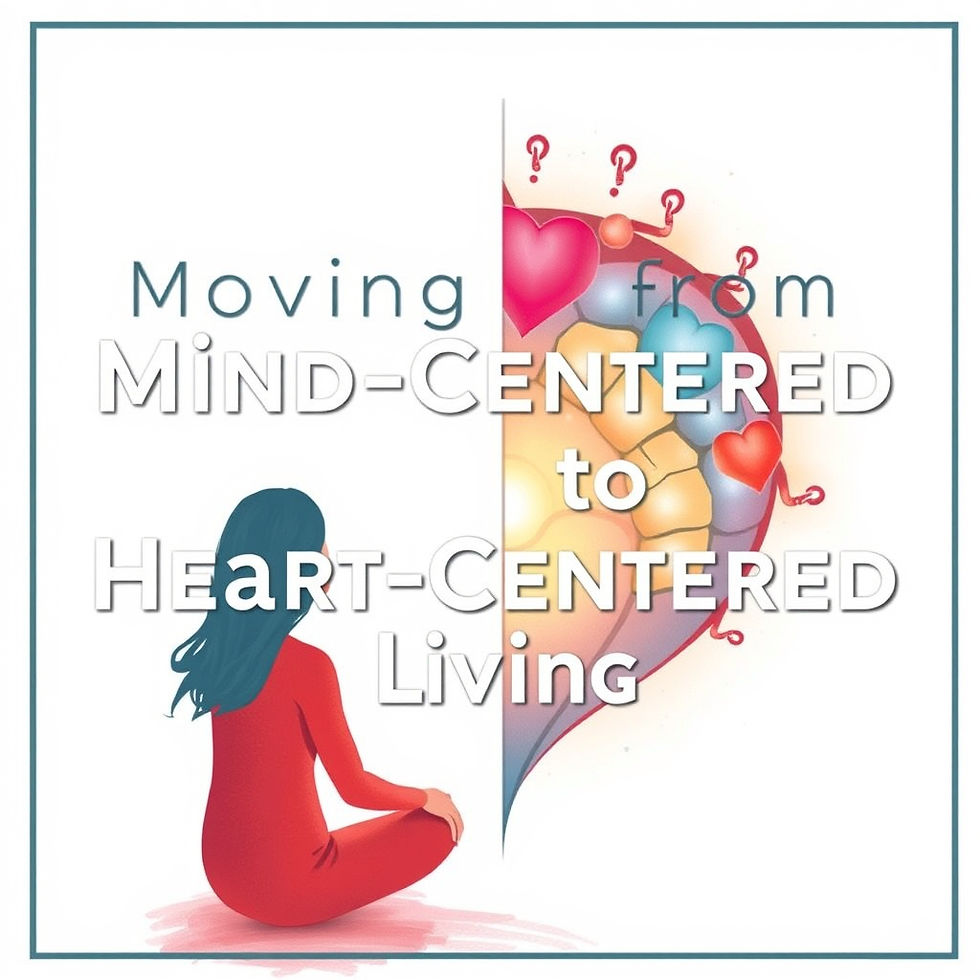
For centuries, Western culture has celebrated the power of the intellect. We are taught to analyze, calculate, compare, and solve problems through logic. While the mind is an extraordinary tool, many people discover that living exclusively from the mind often leads to stress, overthinking, indecision, and emotional exhaustion.
Today, neuroscience, psychophysiology, and contemplative traditions are converging on an important realization: our highest potential emerges when the heart and the brain work together. Moving from mind-centered to heart-centered living is not about abandoning reason—it is about creating harmony between thought, emotion, intuition, and wisdom.
The Difference Between the Mind and the Heart
The analytical mind excels at processing information, making comparisons, organizing facts, and planning for the future. These abilities are essential for navigating daily life.
However, the mind also has limitations. It tends to focus on past experiences, anticipate future risks, and continually evaluate situations for potential threats. This is part of our evolutionary survival mechanism. When left unchecked, the mind can become trapped in cycles of worry, self-doubt, and mental chatter.
The heart offers a different form of intelligence.
Heart-centered living involves responding to life with qualities such as compassion, gratitude, courage, forgiveness, empathy, and inner peace. Rather than reacting automatically, the heart invites us to respond with awareness and authenticity.
When decisions arise from both clear thinking and heartfelt wisdom, they often align more closely with our values, purpose, and overall well-being.
The Science of Heart Intelligence
For many years, the heart was viewed simply as a mechanical pump. Modern research paints a more complex picture.
Scientists have discovered that the heart possesses its own intrinsic nervous system—sometimes referred to as the "heart brain"—containing thousands of specialized sensory neurons. This network communicates continuously with the brain through neural pathways, hormones, pressure waves, and electromagnetic signals.
Importantly, communication does not flow in only one direction. Signals from the heart significantly influence areas of the brain involved in emotional processing, attention, memory, and decision-making.
This means the heart actively participates in regulating our thoughts, emotions, and perceptions.
While the brain remains the body's primary center for cognition, the heart plays an important role in shaping emotional experience and supporting balanced decision-making.
Understanding Heart Coherence
One of the most fascinating areas of research is heart coherence.
Heart coherence refers to a physiological state in which the rhythms of the heart become smooth, ordered, and synchronized. This coherent pattern is associated with improved communication between the heart and brain and reflects greater balance within the autonomic nervous system.
Research has shown that coherent heart rhythms are often accompanied by:
Improved emotional regulation
Greater mental clarity
Enhanced focus and creativity
Reduced stress responses
Increased resilience during challenges
Improved decision-making under pressure
Greater feelings of calm and well-being
In contrast, emotions such as chronic frustration, anger, fear, and anxiety tend to produce irregular heart rhythm patterns, making it more difficult for the brain to process information efficiently.
This does not mean we should suppress difficult emotions. Rather, heart coherence involves acknowledging emotions while intentionally cultivating states that restore balance.
The Heart's Electromagnetic Field
Another remarkable aspect of the heart is the strength of its electromagnetic field.
Every heartbeat generates an electromagnetic field that can be measured several feet away from the body using sensitive instruments. This field is considerably stronger than the electromagnetic field produced by the brain.
Researchers continue to investigate how these electromagnetic interactions may influence interpersonal communication and social connection. While this area of science is still evolving, there is growing interest in understanding how physiological states can affect the quality of our interactions with others.
What is well established is that calm, regulated emotional states support healthier communication, better relationships, and improved emotional resilience.
Why Heart-Centered Living Matters
Many of the world's wisdom traditions have long emphasized that true transformation begins in the heart.
When we cultivate heart-centered qualities, we begin to experience profound shifts in how we relate to ourselves and others.
Heart-centered individuals often display:
Greater compassion
Increased patience
Emotional resilience
Authentic confidence
Better listening skills
Stronger relationships
Increased creativity
A deeper sense of purpose
Rather than being driven solely by fear, competition, or external validation, they make decisions from a place of alignment and integrity.
This creates a life that feels less reactive and more intentional.
Simple Practices to Develop Heart Coherence
Developing heart intelligence is not complicated. Like any skill, it strengthens with regular practice.
1. Heart-Focused Breathing
Place your attention on the area around your heart.
Slow your breathing to a comfortable rhythm, imagining each breath flowing gently in and out through your heart.
Continue for several minutes.
2. Cultivate Elevated Emotions
While maintaining slow breathing, intentionally recall a genuine feeling of gratitude, appreciation, compassion, or love.
These emotional states are strongly associated with coherent heart rhythms.
3. Pause Before Reacting
When faced with a stressful situation, take several slow breaths before responding.
Creating even a brief pause allows the heart and brain to synchronize, helping you respond more thoughtfully rather than react impulsively.
4. Practice Daily Gratitude
Gratitude is one of the simplest ways to shift the nervous system toward greater coherence.
Taking just a few moments each day to appreciate something meaningful can have measurable effects on emotional well-being.
Living with Both Head and Heart
Heart-centered living does not require us to reject logic or intellectual thinking.
Instead, it invites us to integrate the strengths of both the brain and the heart.
The mind provides knowledge.
The heart provides wisdom.
The mind asks, "What is the most efficient choice?"
The heart asks, "What is the most authentic and compassionate choice?"
When these two forms of intelligence work together, we become more resilient, more emotionally balanced, and more capable of creating meaningful relationships and purposeful lives.
In a world filled with constant distraction and uncertainty, learning to access the intelligence of the heart may be one of the most valuable skills we can develop. It reminds us that true wisdom is not found in thought alone, but in the harmonious partnership between the mind, the heart, and our deepest values.


Comments